A craftsman shaping the wooden body of a hanger, a craftsman sanding it, and a craftsman spraying the finish

Special Interview

The Craftsmen Behind AUT-05

AUT-05, one of NAKATA HANGER’s signature models, is created through the craftsmanship and dedication of skilled artisans, each bringing their own expertise to the process. This time, we asked three of our craftsmen to share what makes AUT-05 so special.

We are sure that after reading their stories, you will want to experience AUT-05 for yourself.

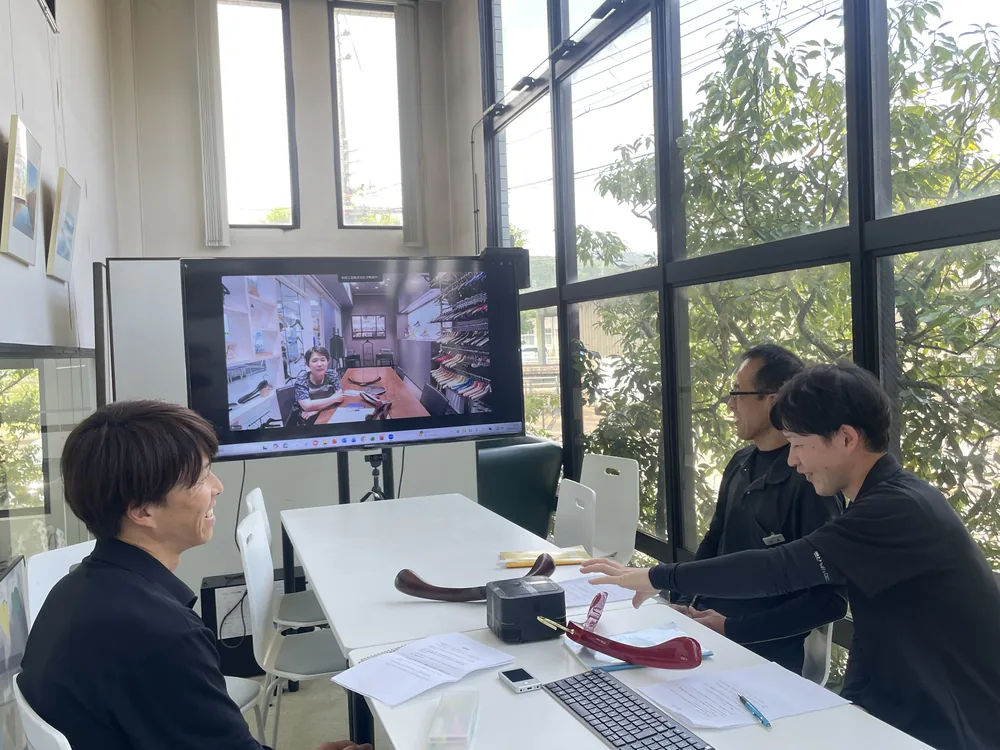
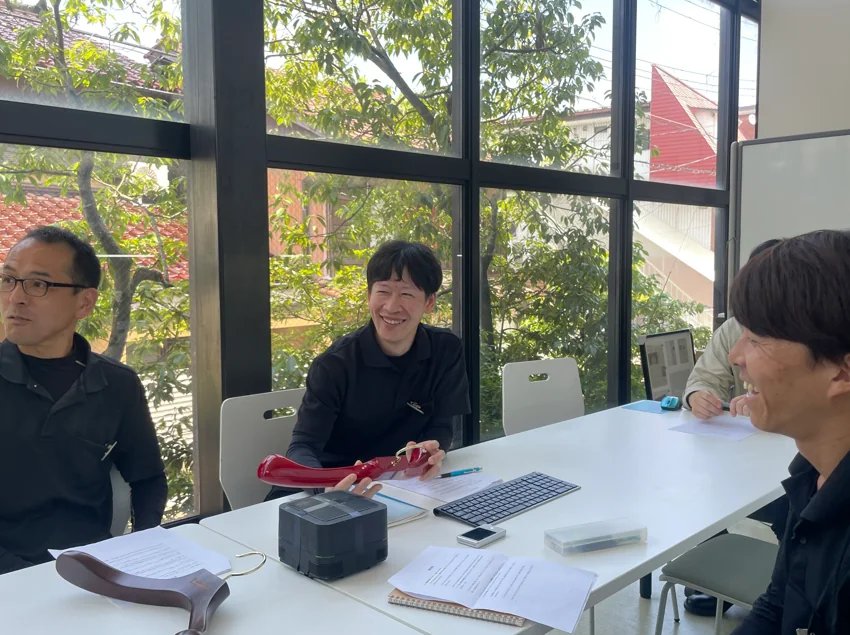
The interview taking place in a room at the workshop

Craftsmen

Introducing the Craftsmen

  • Sakurai Meister, who is responsible for shaping

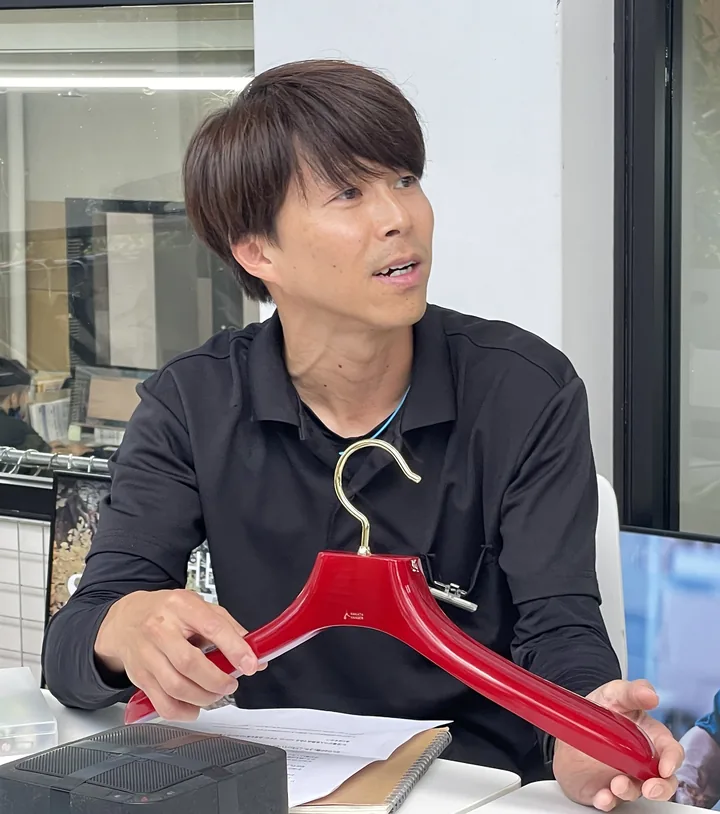
    Sakurai Meister— Shaping

    Responsible for shaping the wooden blocks into the form of a hanger. He transforms each unique piece of natural wood into a beautifully balanced, symmetrical shape.

  • Nakashima Master, who is responsible for refining

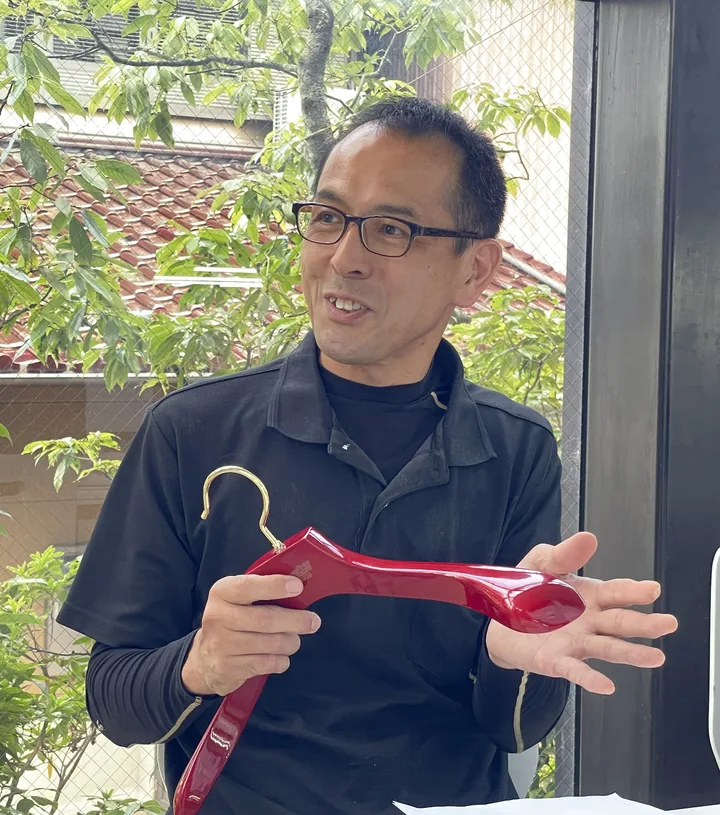
    Nakashima Master— Refining

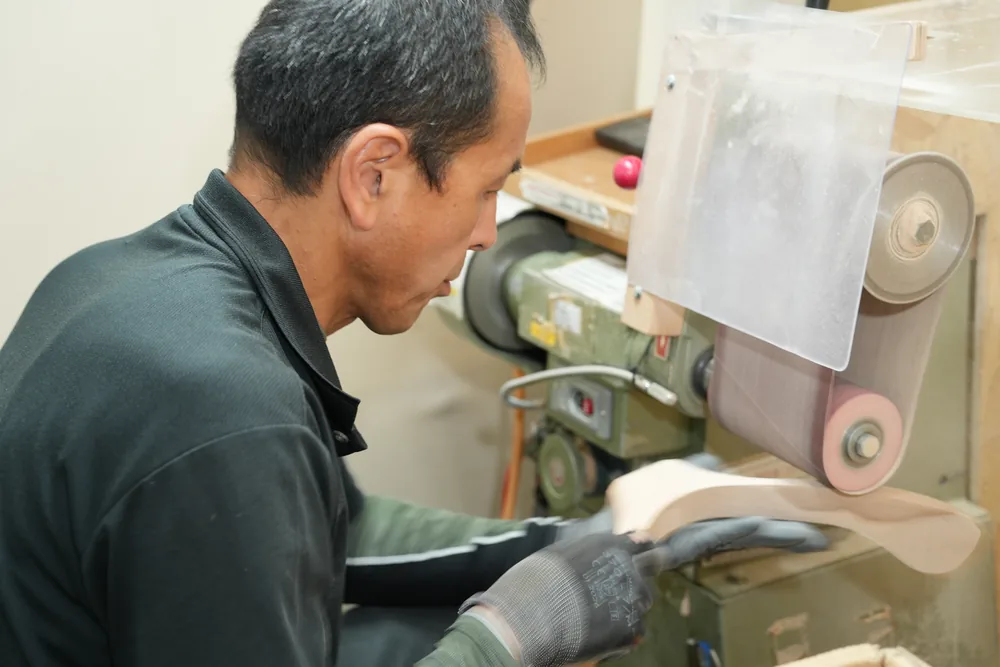
    Responsible for smoothing and refining the shaped wooden parts with sandpaper, carefully working the surface to achieve the desired form and texture.

  • Shimizu Master, who is responsible for finishing

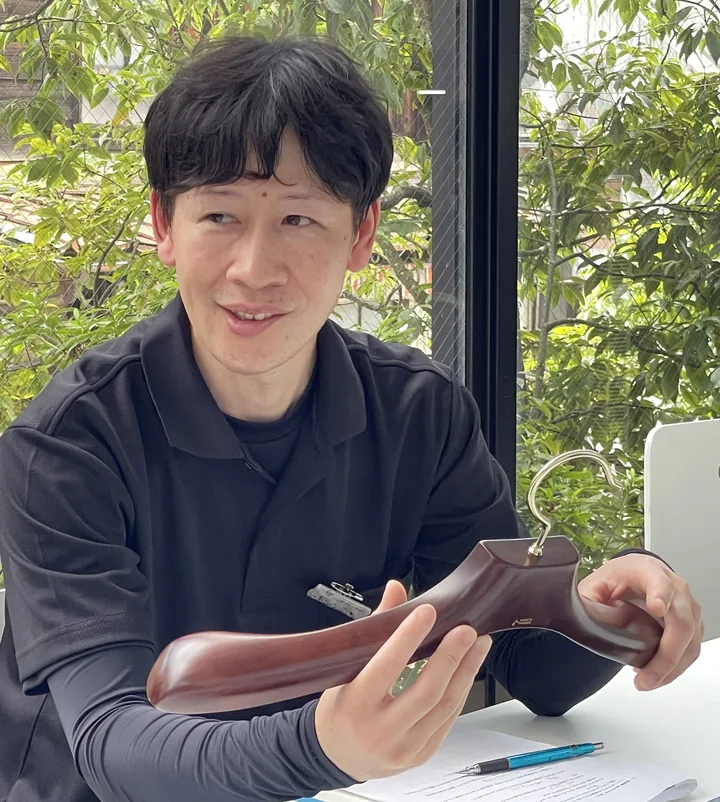
    Shimizu Master— Finishing

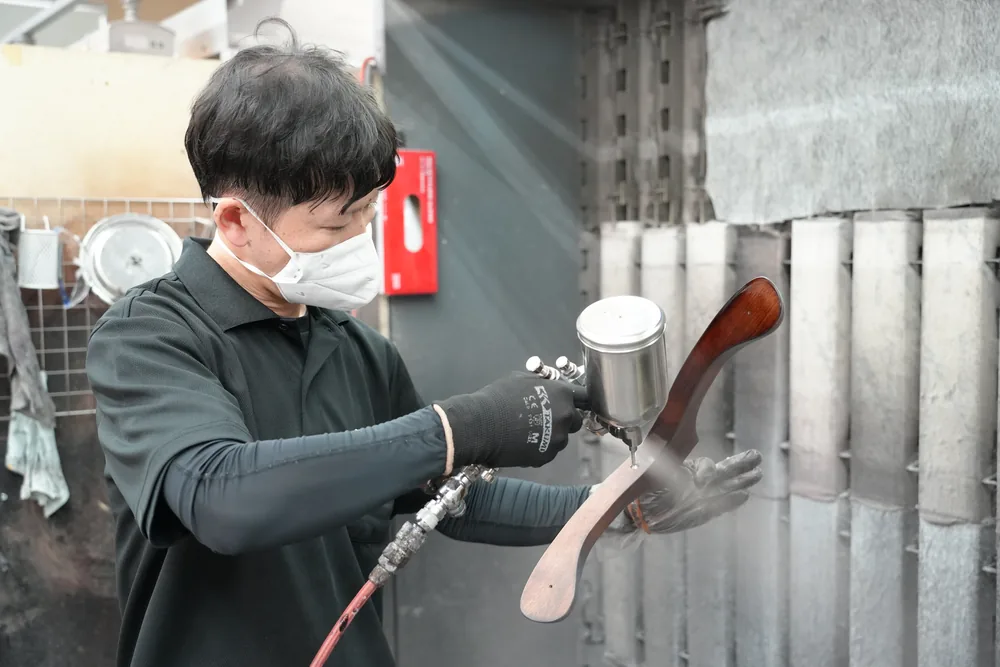
    Responsible for applying the finish to the polished wooden parts. Through the application of color, he enhances the hanger’s refined and luxurious appearance.

All three craftsmen are highly skilled artisans certified through our unique in-house qualification system, the “Meister System.” The Meister System is a career development program that goes beyond conventional promotions, recognizing and appropriately rewarding craftsmen who demonstrate exceptional specialized skills and knowledge. By doing so, it supports their continued growth and long-term success on the production floor.

One of the defining features of the AUT-05 is the rounded shape of the shoulder area. How is this distinctive curve created?

Sakurai

The shoulder is ultimately rounded and refined during the sanding process, following the initial shaping. Before that stage, however, I prepare the wood by creating beveled surfaces that make it easier to achieve the desired rounded form.

I create several beveled surfaces, gradually bringing the wood closer to the final shape. Throughout this process, it is essential to keep both sides perfectly symmetrical. The way the bevels are created also differs considerably between the front and back of the hanger, so the size and angle of each surface have to be carefully adjusted.

When cutting and shaping the wood, we use a template to ensure that the left and right sides are made to the same specifications. However, setting the template requires very precise adjustments, and even the slightest difference in its position can affect the final shape. That is why we carefully check that the template is perfectly aligned on both sides before cutting.

After that, I create the individual beveled surfaces by hand. This is where subtle differences can arise from one hanger to another, so I pay close attention to keeping the size of each surface consistent while also considering the overall balance and proportions of the hanger.

If a bevel is made too large, it cannot be corrected during the sanding stage. Once too much wood has been removed, there is simply no material left to work with. On the other hand, if the bevel is too small, it becomes difficult to achieve the desired rounded shape during sanding.

Finding the right balance is therefore one of the most important parts of the process. It is a matter of removing just enough wood to create the desired curvature, while always leaving enough material to refine the final shape.
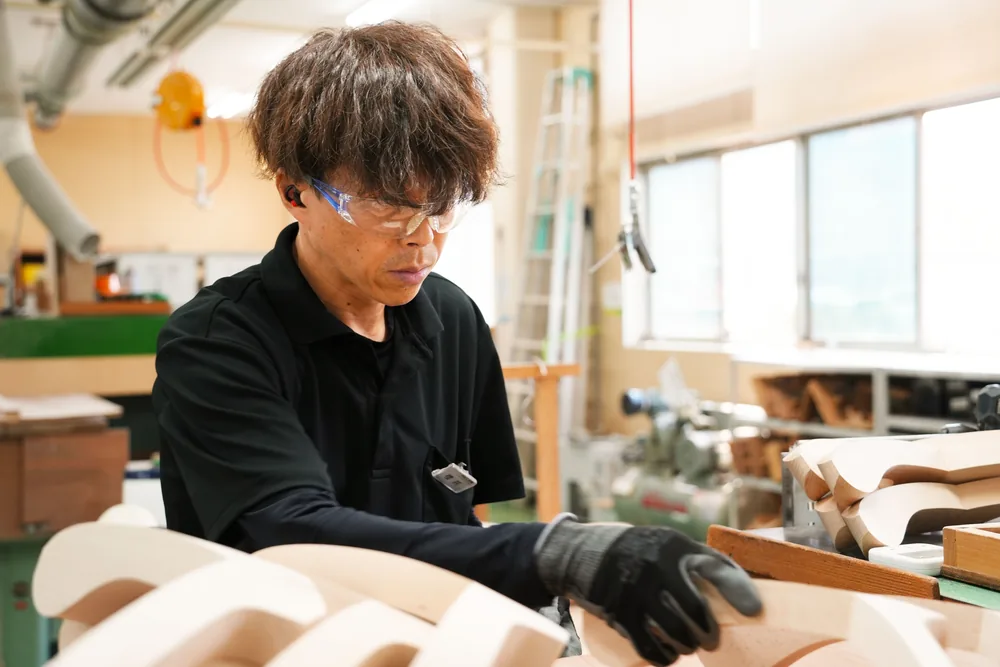
The shaping process: cutting the wooden parts with a template and creating the beveled surfaces by hand
A skilled craftsman can shape the hanger while leaving precisely the right amount of material for the final sanding because they can visualize the finished form in their mind from the very beginning.

After the shaping process, the hanger is carefully sanded and polished. What is the most challenging aspect of sanding AUT-05?

Nakashima

AUT-05 has a continuous, rounded shape that flows from the front to the back, but the degree of curvature differs between the top of the shoulders, the back, and the front. The challenge is to blend these different curves together seamlessly so that the overall shape looks beautiful and natural. SET-01, a suit hanger with a similar shape to AUT-05, has a more linear silhouette, whereas AUT-05 is defined by the beauty of its curved silhouette. Because of these differences, the way I sand the wood have to be adjusted depending on the model.

What is the relationship between sanding and painting?

Nakashima

It’s extremely important. If the surface of the wood is rough after sanding, no matter how beautifully it is painted, the final finish will never look truly refined. This affects not only the wood texture, but also the beauty of the curves and straight lines. That’s why, during the sanding process, I always keep the painting stage in mind and make sure the surface is properly smoothed and prepared for finishing. This makes it easier to achieve a beautiful final result. Currently, we sand the wood twice using different grades of sandpaper. In the past, we used to sand it three times.

Shimizu

The level of craftsmanship in the sanding process is very high. Even with just two rounds of sanding, they are able to achieve a surface of exceptional quality.

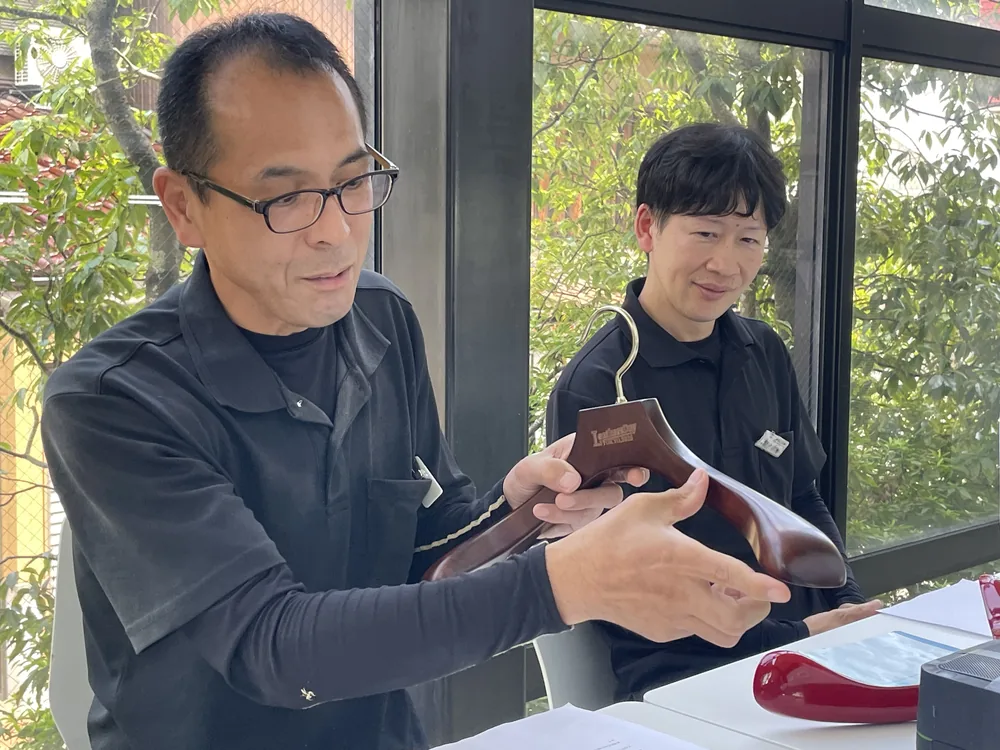
The refining and finishing craftsmen examining a sanded wooden part together
Mr. Nakashima explains that the degree of curvature varies from one part of the hanger to another. If you have an AUT-05 at hand, we invite you to run your hand along its contours and experience the subtle differences in its shape for yourself.

What aspects of AUT-05 best demonstrate NAKATA HANGER’s craftsmanship and technical expertise?

Sakurai

The AUT-05 has a very pronounced curve at the shoulders, while the back gently curves and rounds beautifully. There are many different surfaces and contours within a single hanger. At the bottom, for example, there is a small, flat surface that is just large enough to prevent the edges from feeling sharp to the touch. No matter which angles you look at it from, you’ll find both carefully shaped surfaces and flowing curves. I don’t think this is the kind of hanger you usually come across.

When clothes are placed on the hanger, the curved sections become hidden. However, those are actually the areas I would most like people to notice and appreciate.

Shimizu

I believe one of our strengths is our ability to achieve this beautiful Mars Brown finish while still allowing the natural grain of the wood to show through to some extent. When applying a dark color, it can be challenging to maintain an even finish, especially along the edges, where the color can easily become uneven or wear away during sanding. Roughness can also remain on the surface if the finishing process is not carefully controlled. We take great care to prevent these issues, and achieving a smooth, refined finish is something that everyone in our finishing department is deeply committed to.

What do you keep in mind every day to maintain consistent quality?

Sakurai

We make the AUT-05 throughout the year, to the point that there is hardly a day when it is not part of our production process. Wood naturally varies in character. Depending on the material, it can be harder or softer, and even within a single hanger, there can be differences. Since the hanger is made by joining two pieces of wood at the center, for example, the wood on the left side may be slightly softer while the wood on the right is harder. These subtle differences are something we only truly understand once we begin working with the wood. Harder wood is more prone to reverse grain, while softer wood is less likely to produce it. As a result, each piece of wood requires a slightly different approach. Even with these natural variations, we carefully work on each individual hanger, making the necessary adjustments along the way to ensure that every piece meets the same high standard of quality.

We also need to make sure that the quality remains consistent even when the person making the hanger changes. So, we pay close attention to details such as the size of the surfaces and make sure that each hanger has the same finish. I also sometimes train new craftsmen, so it’s important that the quality does not change depending on who makes the hanger. Maintaining that consistency is something I always keep in mind.

Shimizu

Since almost all of the painting process is done by hand, any differences in technique between craftsmen can naturally affect the final finish. This is another aspect that we pay close attention to in order to maintain consistency.

The painting process is also greatly affected by temperature and humidity. We don’t always have the time to constantly check a thermometer, so we rely on our senses as well—feeling when the humidity is rising or noticing when the day feels particularly cold or hot.

This is especially important during the rainy season. When it starts to rain, you can often sense the change in the air. Recently, we’ve also started alerting one another whenever someone working near the outside notices that it has started raining, as the humidity is likely to rise. This allows everyone to adjust their work accordingly.

The finishing process: applying color to the wooden parts with a spray gun
Achieving an even finish across the hanger is surprisingly complex three-dimensional form requires a high level of skill and experience.

What do you like most about the AUT-05?

Nakashima

After sanding thousands, even tens of thousands, of AUT-05, I’ve come to realize that what truly brings out the beauty of its curves is the flat surfaces on the front and back. I believe these flat areas are what make the curves stand out so beautifully, which is why I pay particular attention to them.

If these flat surfaces become too rounded, the overall shape can start to look loose or lose its definition. But even a small amount of flatness can make the curves appear much more pronounced and beautiful. It’s almost as if these flat surfaces play a supporting role, allowing the curves to truly stand out. That balance between the flat surfaces and the curves is probably what I love most about the AUT-05.

Shimizu

After working on thousands, even tens of thousands, of hangers, I still find AUT-05 a hanger that never gets old. I’ve been working with it for nearly ten years, and I never tire of looking at its distinctive shape and Mars Brown finish. That’s one of the things I particularly like about it.

At the same time, as someone involved in the production process, I see its three-dimensional and complex form as an opportunity to continually develop and refine my skills through the work itself. In that sense, I feel that AUT-05 is an ideal shape for refining our techniques and further developing our craftsmanship.

Sakurai

For me, it’s all about the curves of the hanger. The rounded shape of the back, the front of the shoulders, and the back of the neck—I find each of these curves incredibly beautiful. Because I have a clear image of the finished hanger in my mind, I work while carefully considering how much to shape each area to achieve the perfect curvature. And yet, when the finished hanger finally takes shape, its beauty is so captivating that I find it irresistible.

It’s not often that a hanger captures your attention. What I love about the AUT-05 is that its beautiful shape and curves make you want to pause and appreciate it.

The refining process: sanding the wooden parts on a belt sander
The sanding process creates a sense of contrast in the hanger’s form, defining the balance between its flat surfaces and graceful curves.
The three craftsmen after the interview
The interview was conducted online, connecting our headquarters factory with our showroom in Tokyo. It was a valuable opportunity to rediscover the depth and intricacy behind the hanger.

At every stage of the process, our craftsmen bring their skill, expertise, and dedication to their work, passing the baton from one to the next like a relay race. It is this seamless succession of craftsmanship that brings each NAKATA HANGER to life.

If you appreciate the beauty of a garment’s silhouette—not only when it is worn, but also when it is stored—we invite you to discover the pleasure of hanging your clothes with NAKATA HANGER.

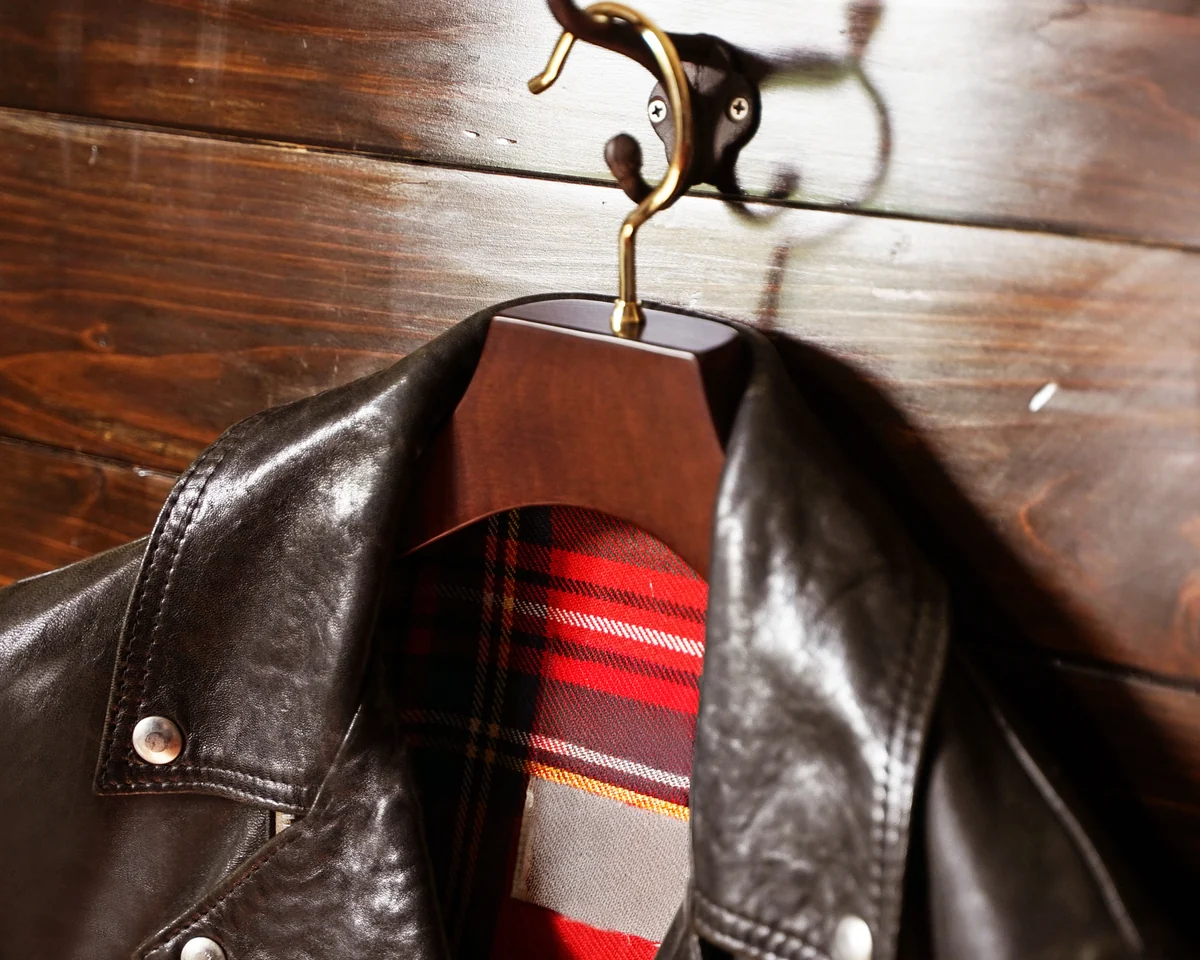
AUT-05N men's jacket hanger in Mars Brown AUT-05N ¥ 6,000 JPY View Product